
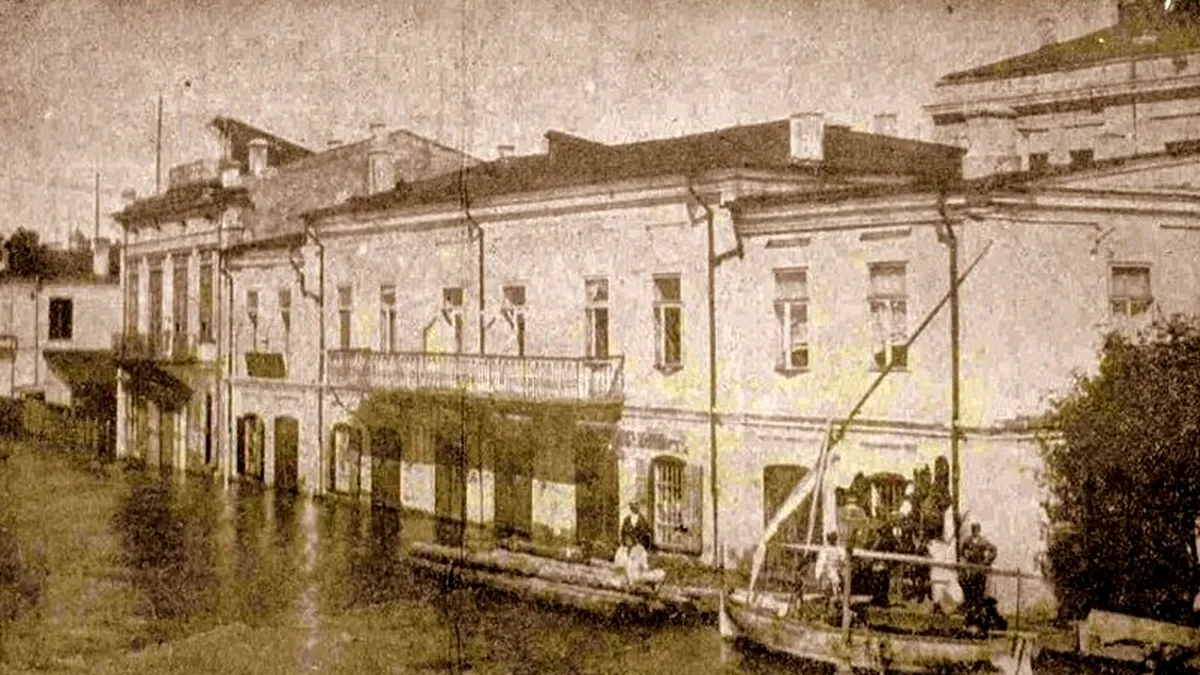
Cinema reached Romania shortly after its international emergence. The first projections took place in Bucharest in May 1896, facilitated by the French-language newspaper L'Indépendance Roumaine, which played a central role in introducing the Lumière cinematograph to the Romanian public. In 1897, Mihail Văcărescu-Claymoor would comment on the first Romanian "films (vederi)" made by Paul Menu, as noted by film historian Bujor T. Rîpeanu.
Paul Menu and the First Films Made in Romania
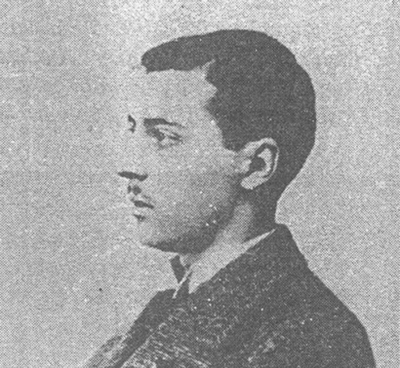
Paul Menu (born 10 May 1876, Paris - died 27 July 1973, Paris) was a French photographer and operator who became the author of the first films shot on Romanian territory. Settled in Bucharest, where he owned an optical shop on Calea Victoriei, he collaborated with L'Indépendance Roumaine to produce and exhibit films locally.
Between 10 May and 20 June 1897, Menu created a series of 17 short films known as vederi (views) - each approximately one minute long - using a dual-purpose apparatus for both filming and projection. These were developed by the Lumière company in Lyon and later projected in Bucharest. His work was included in the Lumière catalogue, confirming its integration into early international cinema circulation.
The first public screening of films shot in Romania took place on 8 June 1897, marking a foundational moment in Romanian film history.
Subjects and Characteristics of the Early Films
Menu's films were short actuality films documenting both official events and everyday life. The recorded subjects include:
- The 10 May national celebrations (military parade and royal presence)
- King Carol I and Queen Elisabeth in public appearances
- Băneasa racecourse events
- Scenes from Șoseaua Kiseleff
- The terrace of Capșa café
- Târgul Moșilor
- Danube flotilla exercises
- The Galați floods (June 1897)
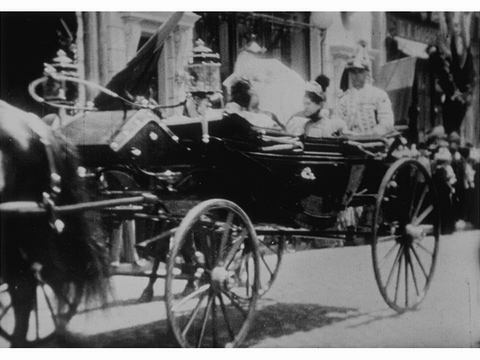
These films represent some of the earliest visual records of Romanian society and urban life. They combine staged ceremonial documentation with spontaneous reportage, showing an early transition toward documentary film.
The Galați Floods: Early Documentary Film
On 20 June 1897, Menu filmed the floods in Galați, producing Inundațiile de la Galați (in four parts), along with Exercițiile marinarilor flotilei de pe Dunăre. These works are frequently identified as among the first documentary/reportage films in Romania, as they captured a real, unfolding event rather than a planned ceremony.
The films were processed in Lyon and later screened in Romania (including screenings in July 1897). Contemporary press sources described these films as successful "tableaux" presented across multiple daily projections.
Contemporary Reception
According to Voința Națională (June 1897), Menu's films were shown in structured programs including multiple daily screenings. The listed subjects included:
- "Defilarea de 10 Mai înaintea M. S. Regelui"
- "M. S. Regina în trăsură"
- "Regele călare, escortat de statul-major regal și atașații militari străini"
- "Tribunele la cursele de la Băneasa"
- "O schiță de la hipodromul de la Băneasa"
These descriptions confirm both the documentary nature and the public appeal of the early films.
Short Career and Transition to Scientific Film
Menu's filmmaking activity lasted only about 40 days. In 1898, he sold his cinematographic equipment to neurologist Gheorghe Marinescu.
Marinescu used film for medical research, producing in 1899 early scientific films such as Tulburările mersului în hemiplegia organică. These works are considered among the earliest examples of scientific cinema worldwide, extending the use of film beyond entertainment into research.
Rediscovery of the Films
Most of Menu's films were long considered lost. Only fragments were preserved in Romania for decades. In 1995, film historian Bujor T. Rîpeanu identified several of Menu's films at the Cinémathèque Française, including:
- Băneasa races
- Scenes from Șoseaua
- Târgul Moșilor
- Part of Inundațiile de la Galați
This rediscovery re-established Menu's role as a foundational figure in Romanian cinema.
Additional Context: Early Regional Film Activity
In early 1897, projections were already taking place in Bucharest, including a screening by Giorgi Kuzmič on 25 February 1897. Shortly after, he organized a projection in Ruse (Bulgaria), illustrating the rapid regional spread of cinema in the Balkans.